Sunnyside Community Garden, Islington

2018-

200

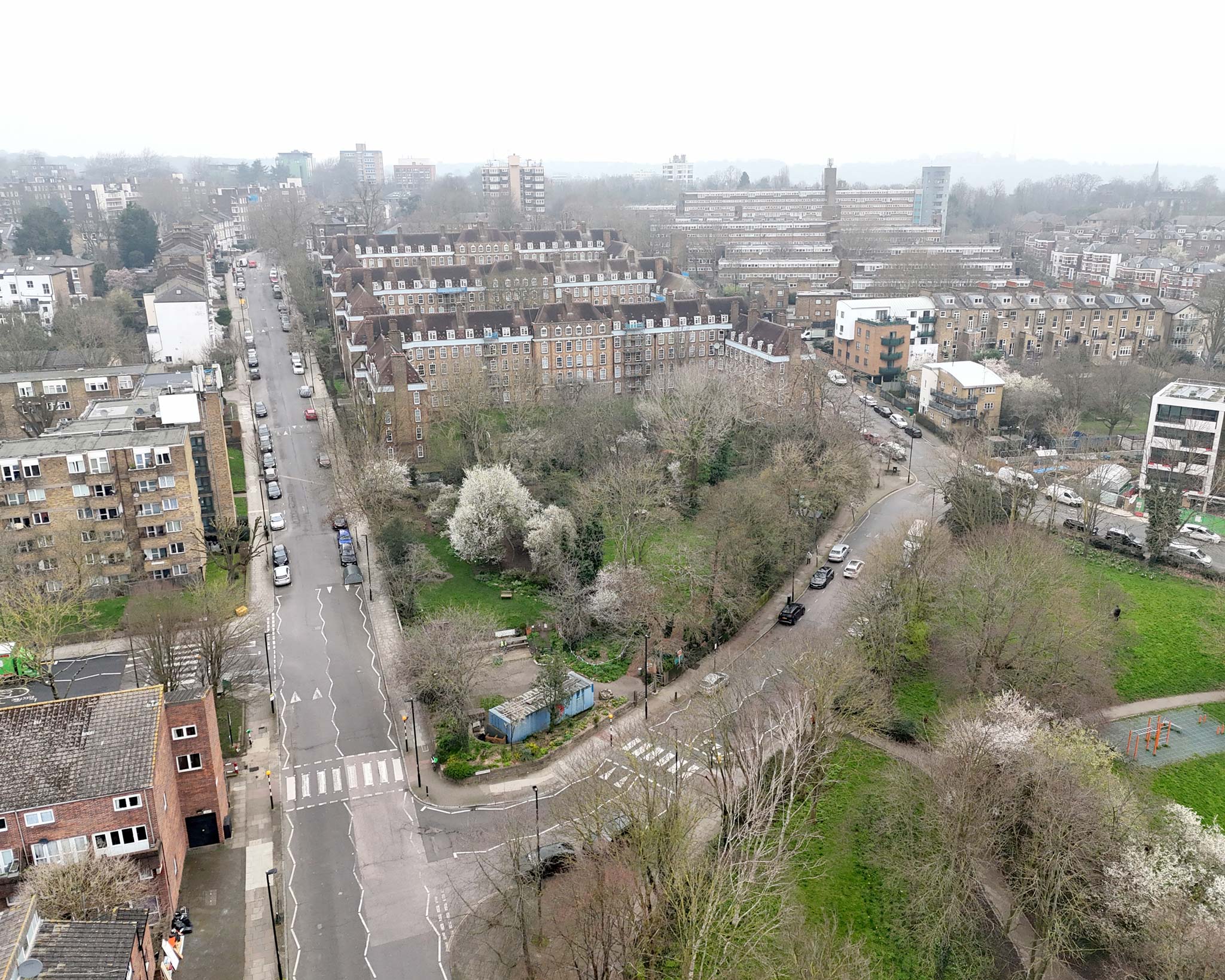
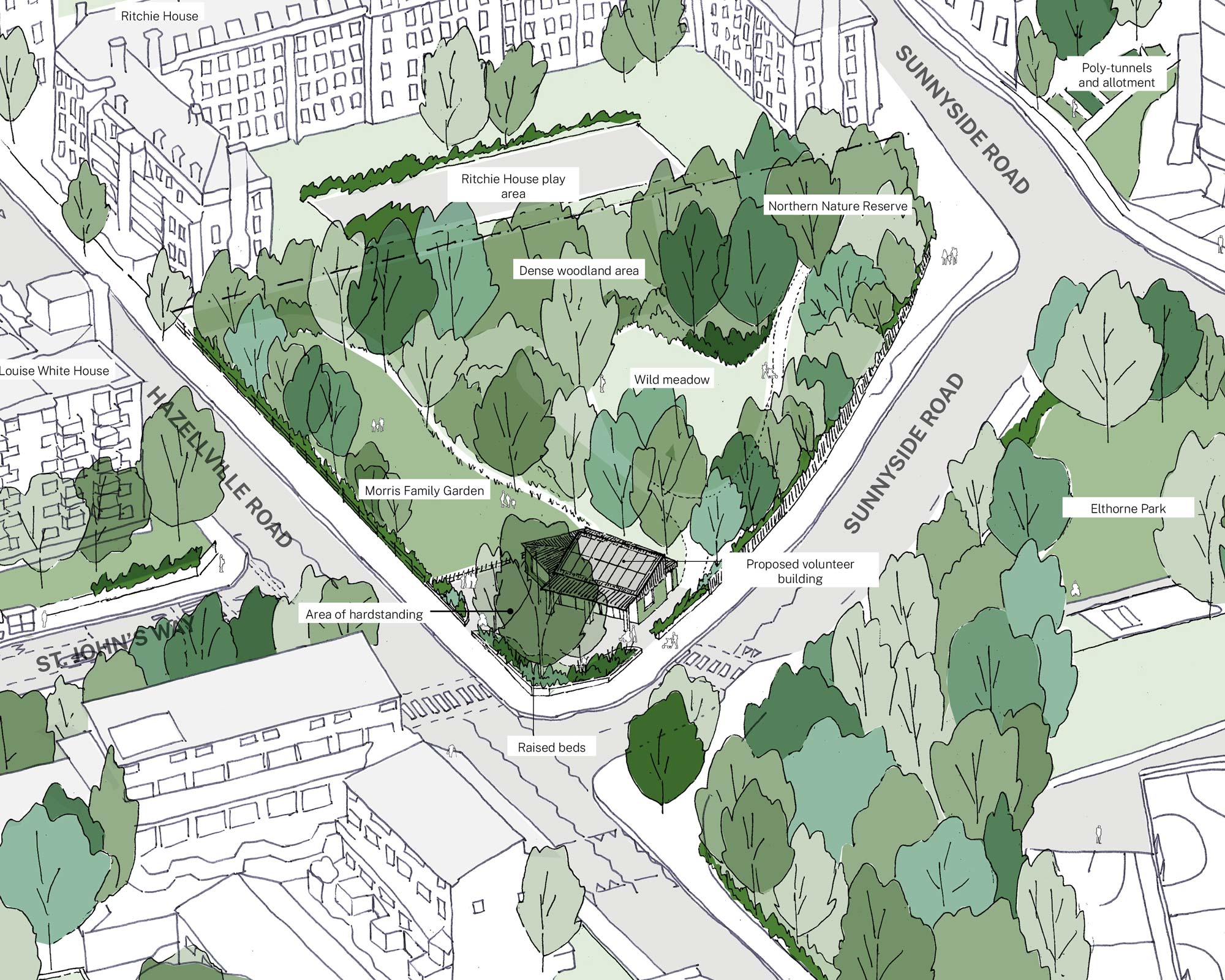
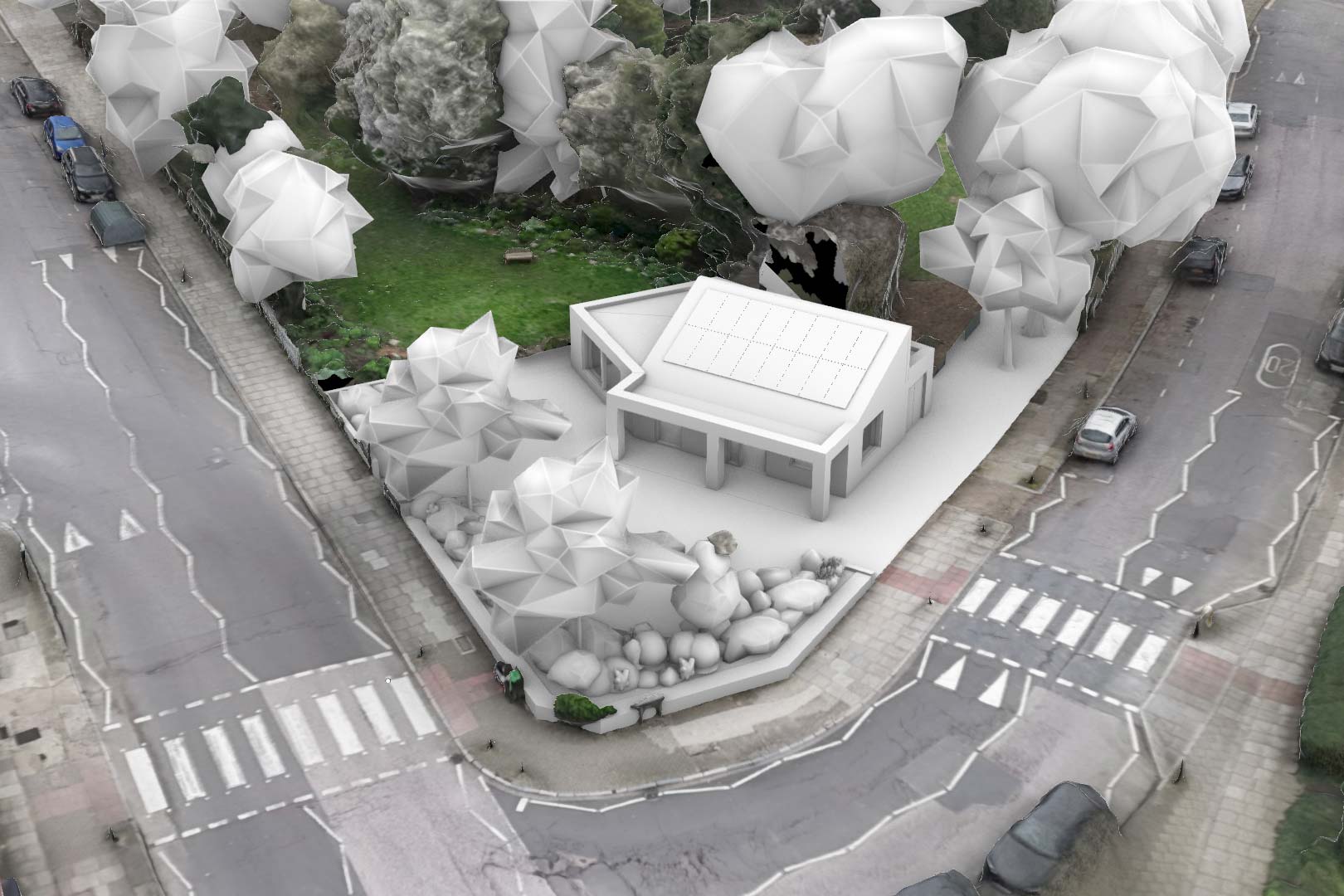
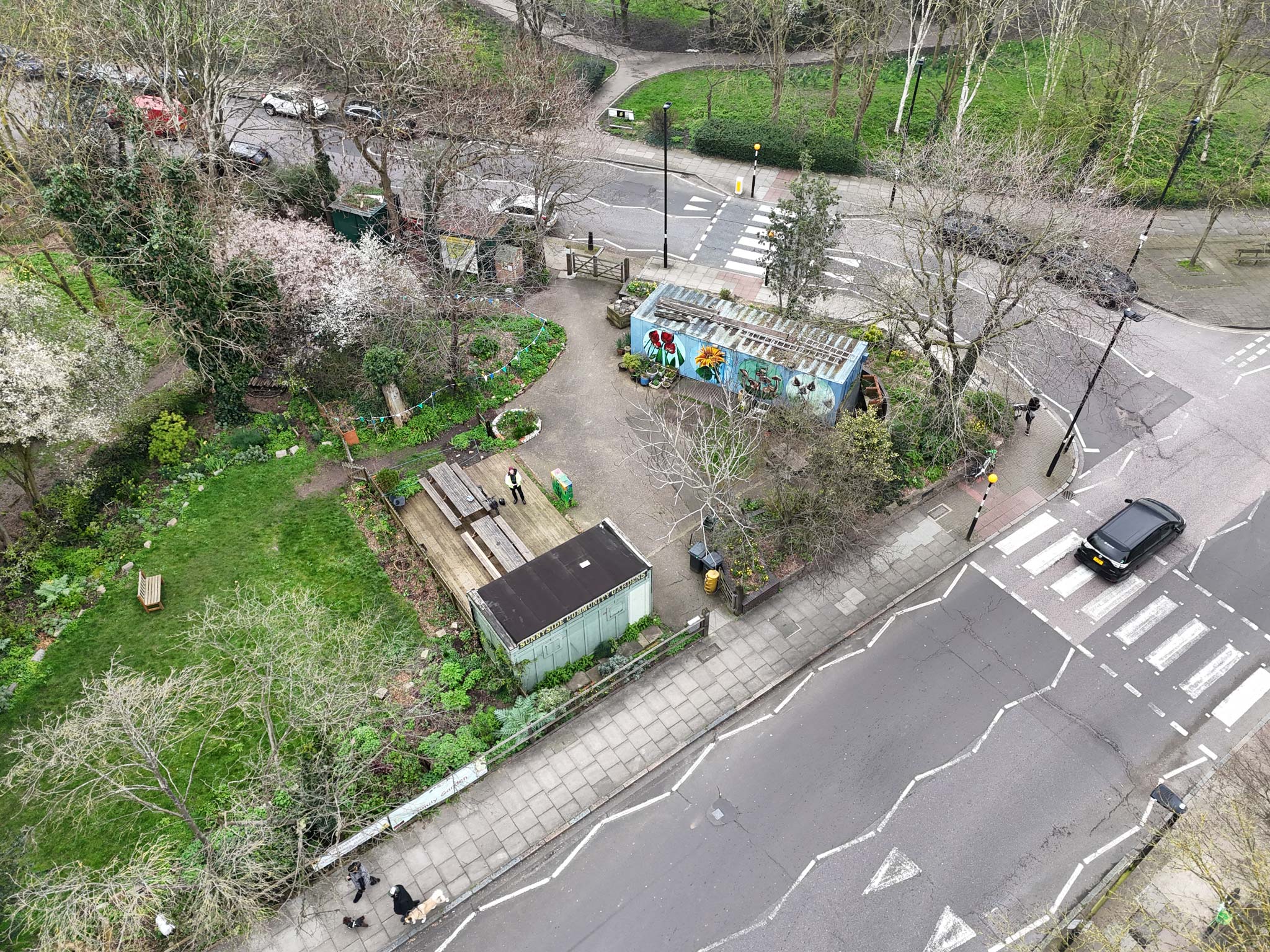
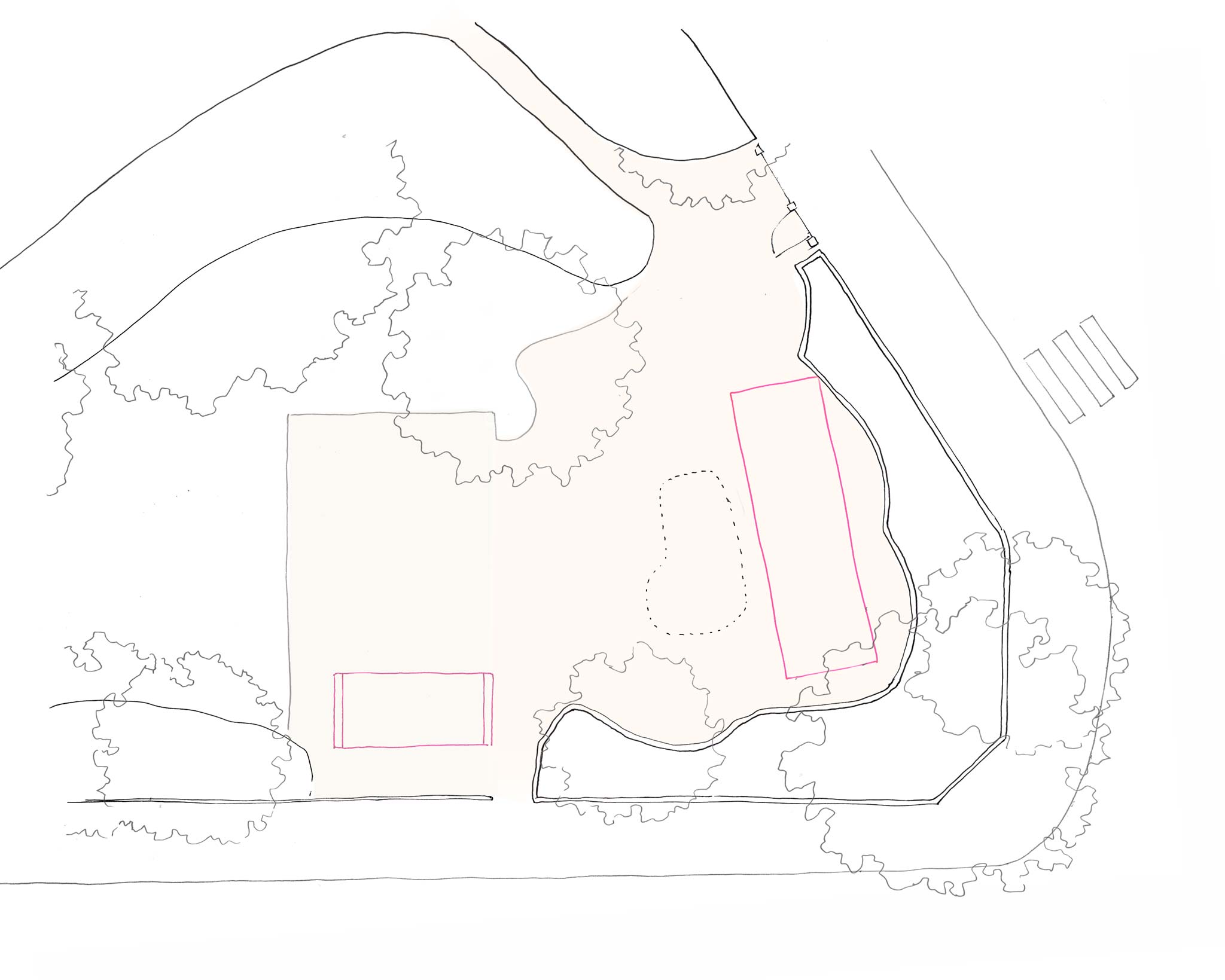
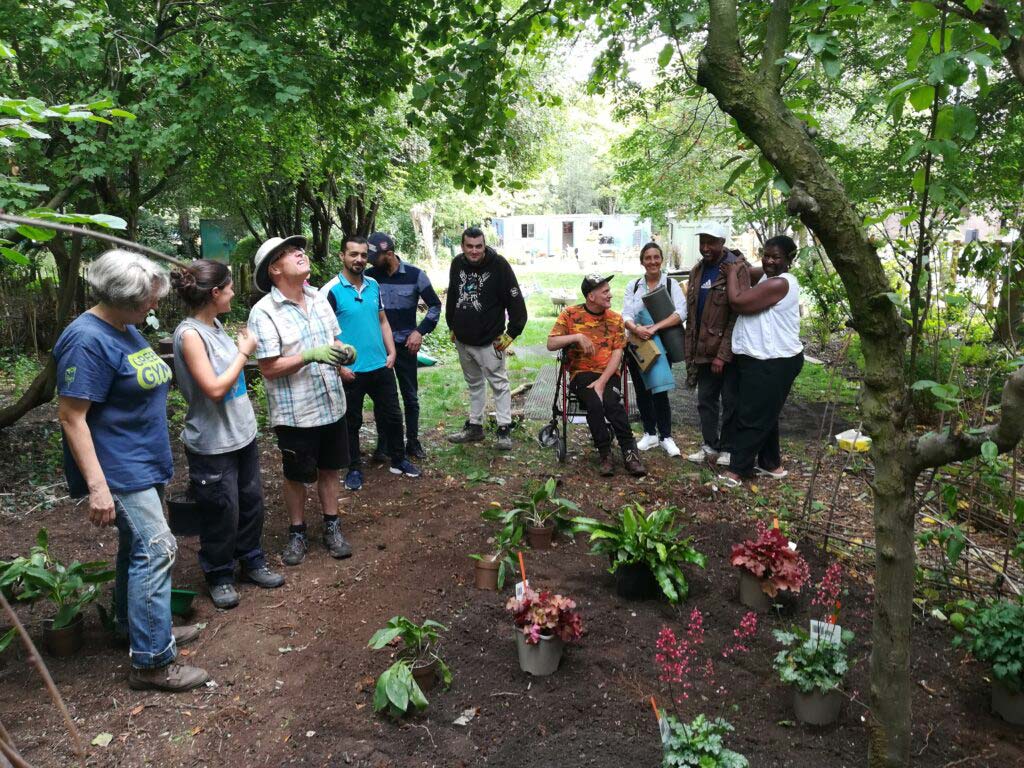
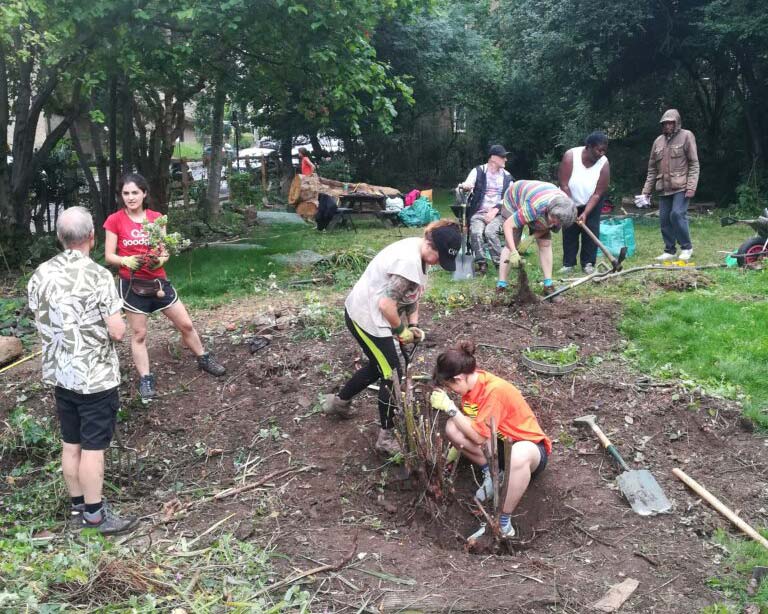
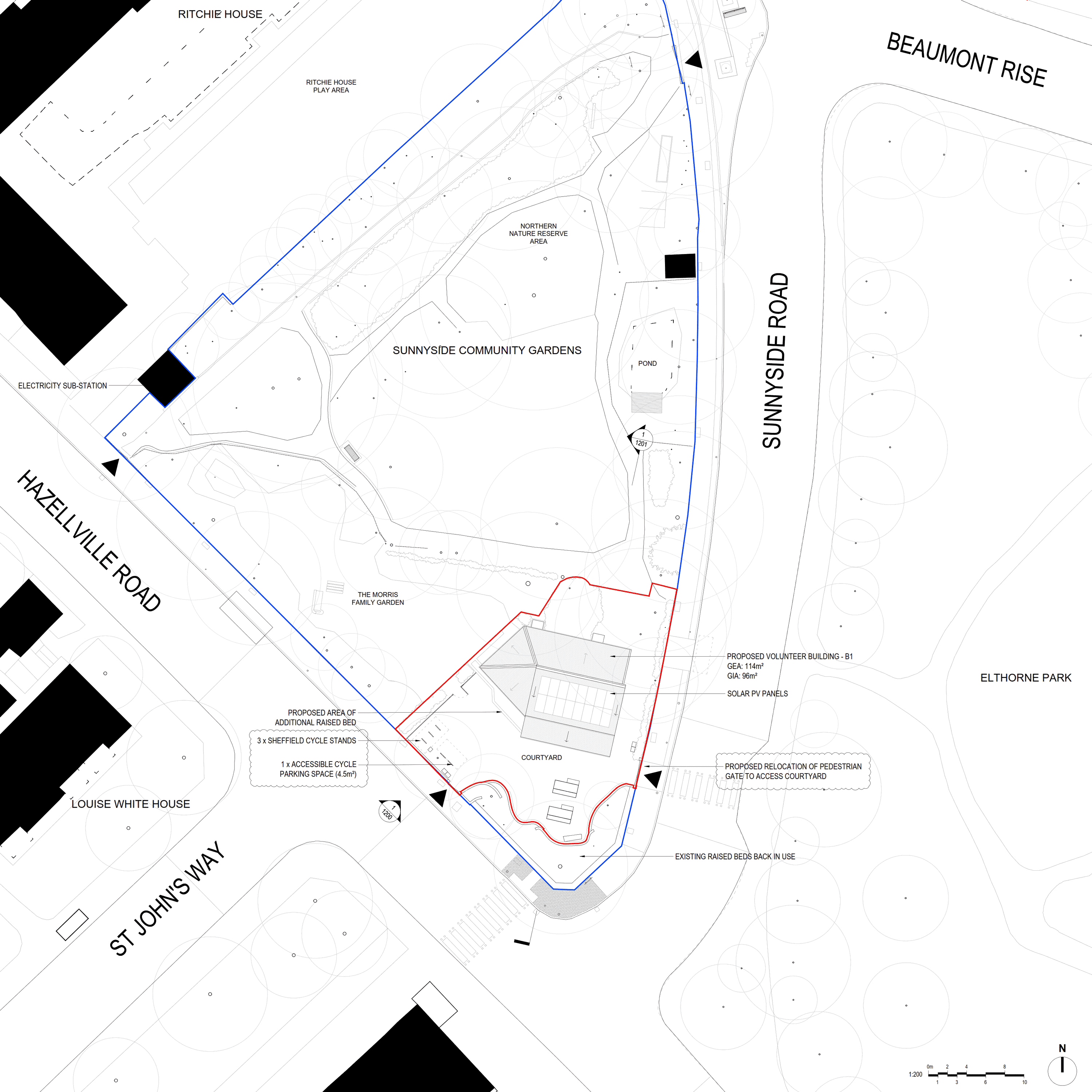
Sunnyside Community Gardens is a therapeutic horticulture charity occupying a triangular site on Hornsey Rise in Islington. The site is unusual: it's completely open, with no gates or barriers, and sits on what was once 1970s landfill from demolished terraced houses when nearby estates were built. Over decades, guerrilla gardening transformed it into a biodiverse pocket of green space, now designated as a Site of Importance for Nature Conservation.

More text

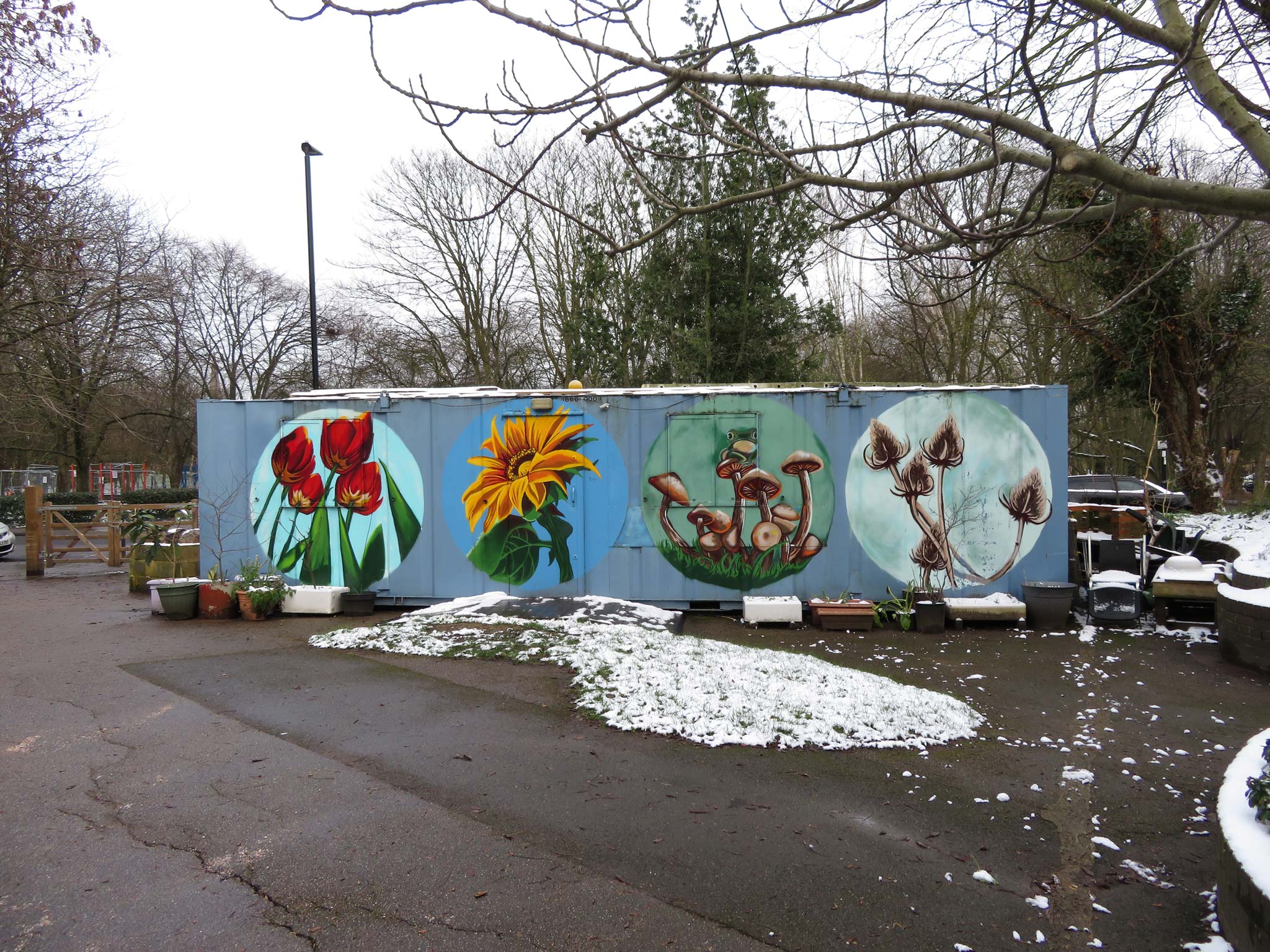
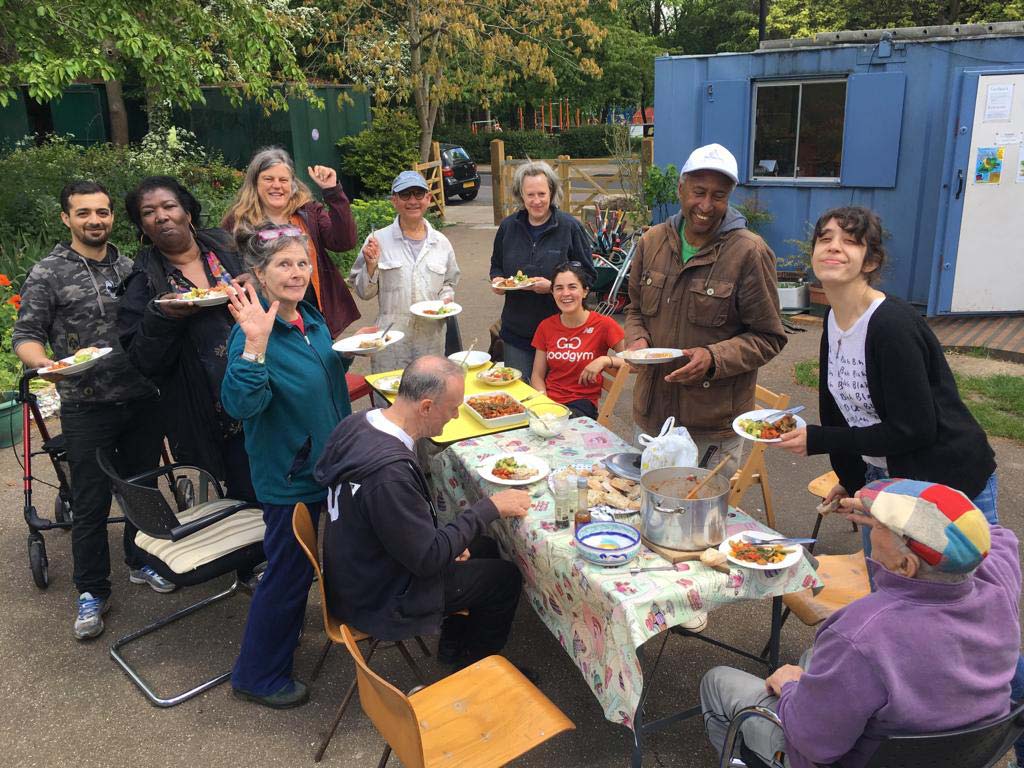
The brief was to replace an old shipping container and deteriorating timber toilet block with a proper building that could support the charity's post-pandemic needs. Critically, they needed space for communal lunches with 20 to 25 volunteers (impossible in the cramped, uninsulated container). The building also had to work for elderly volunteers and people with neurodiverse needs who found the current facilities overwhelming.

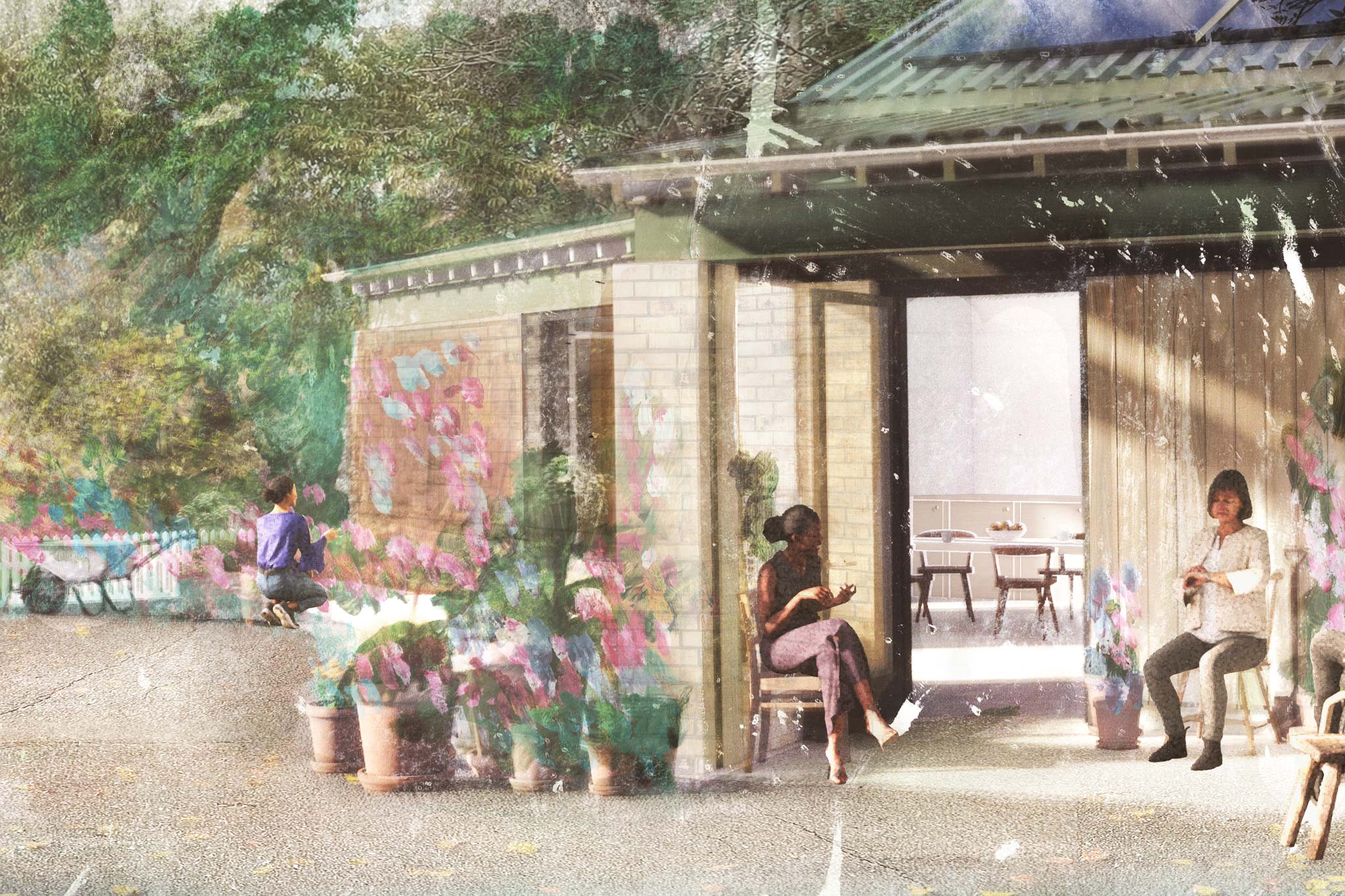
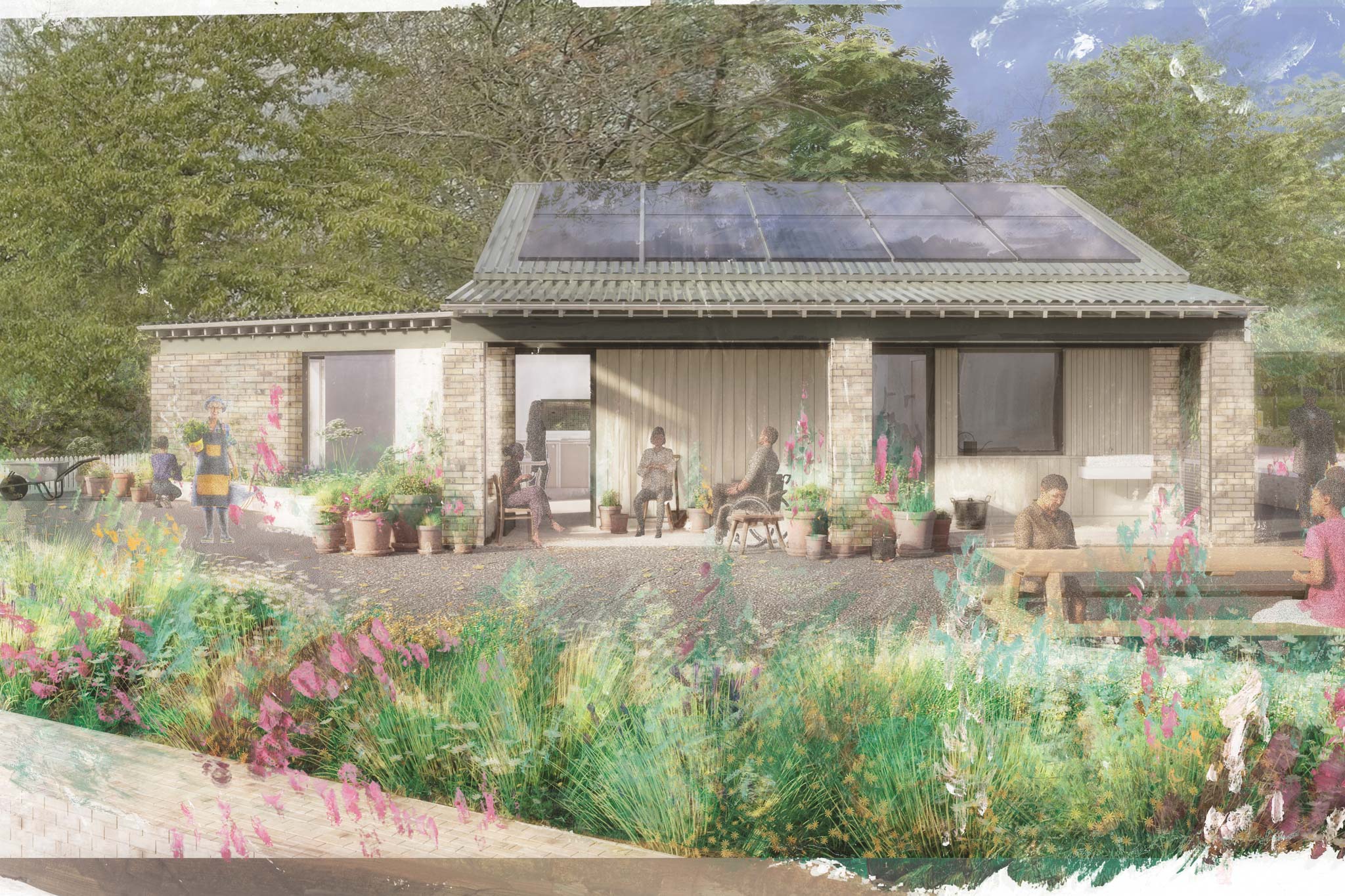
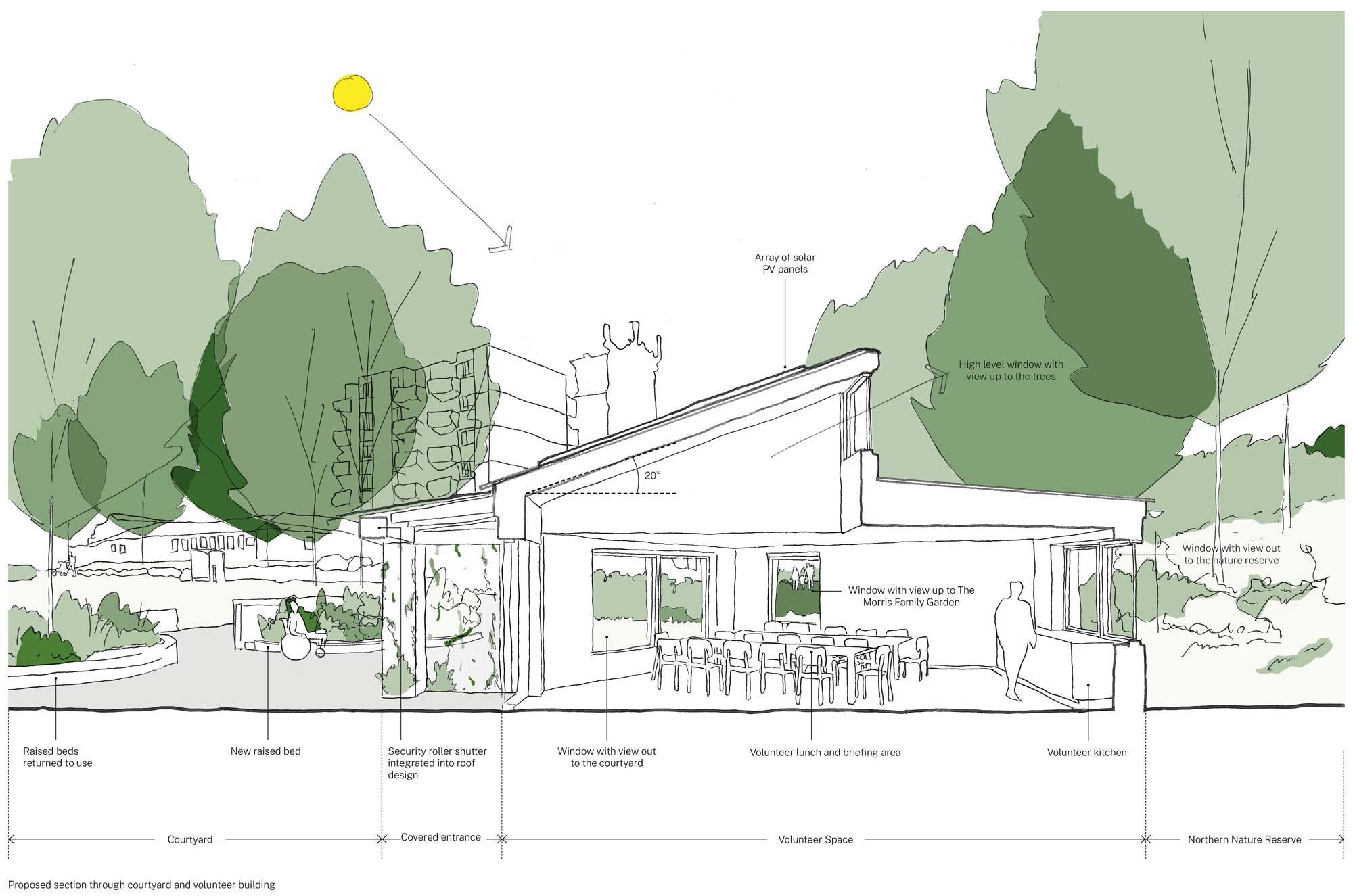
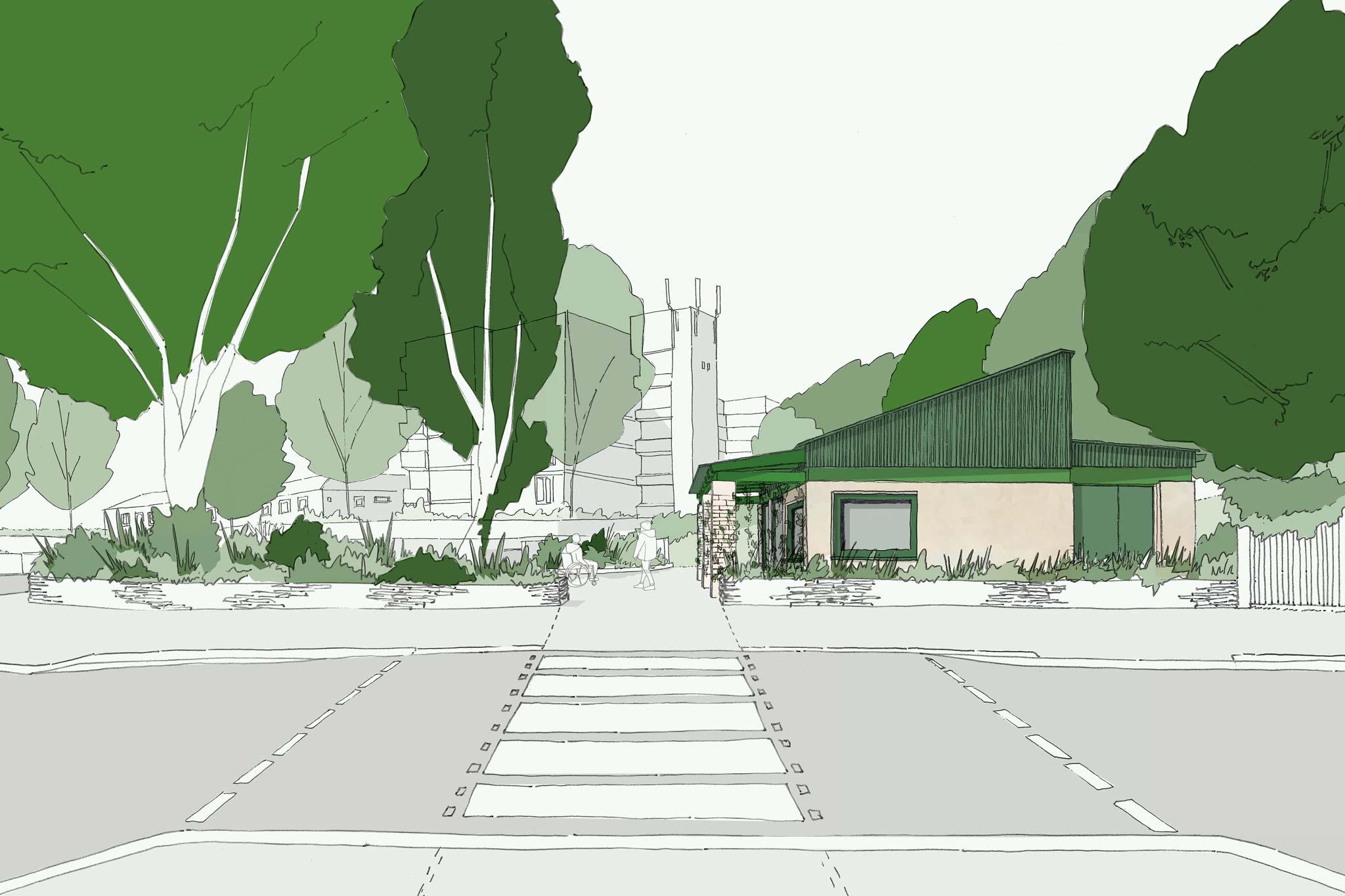
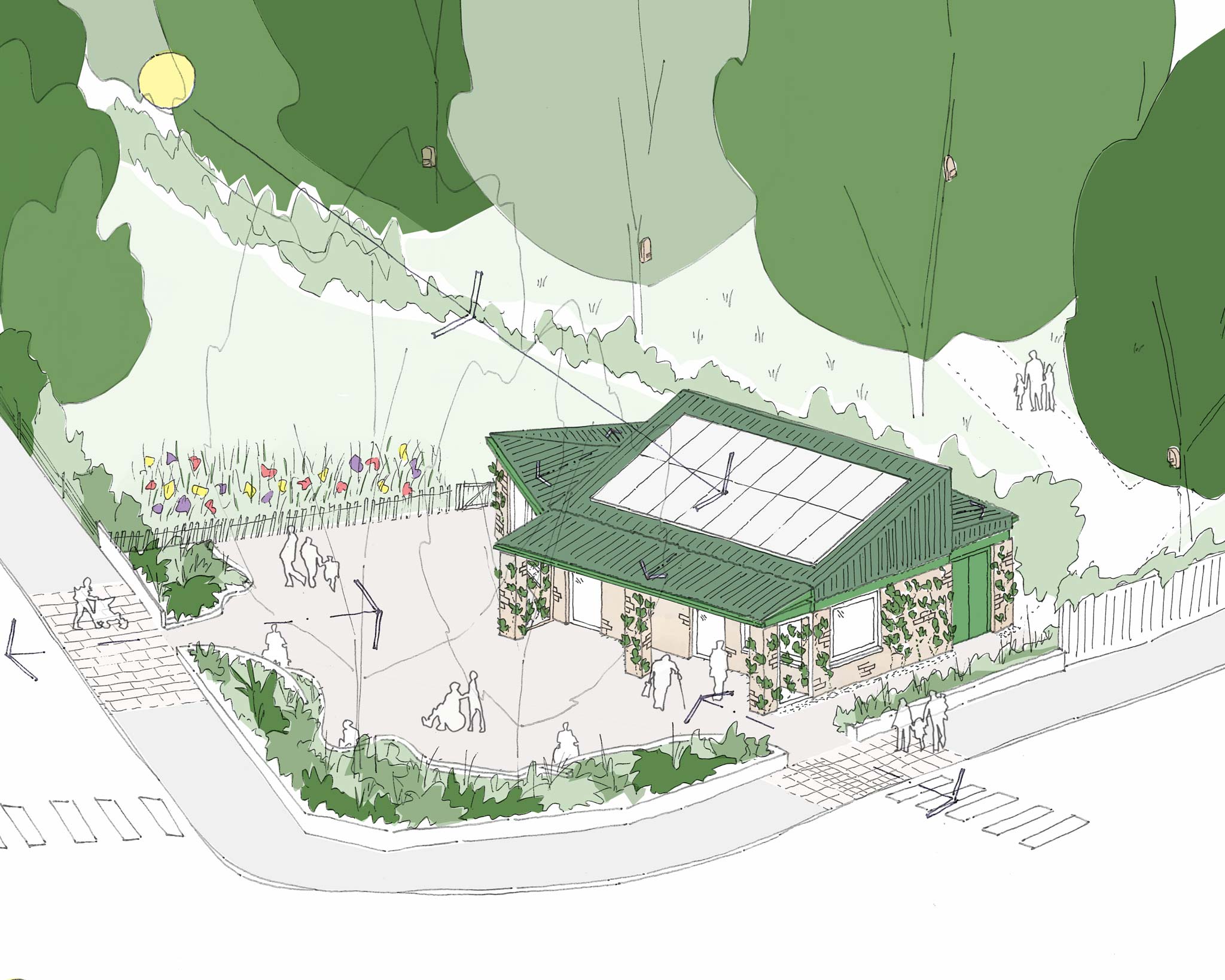
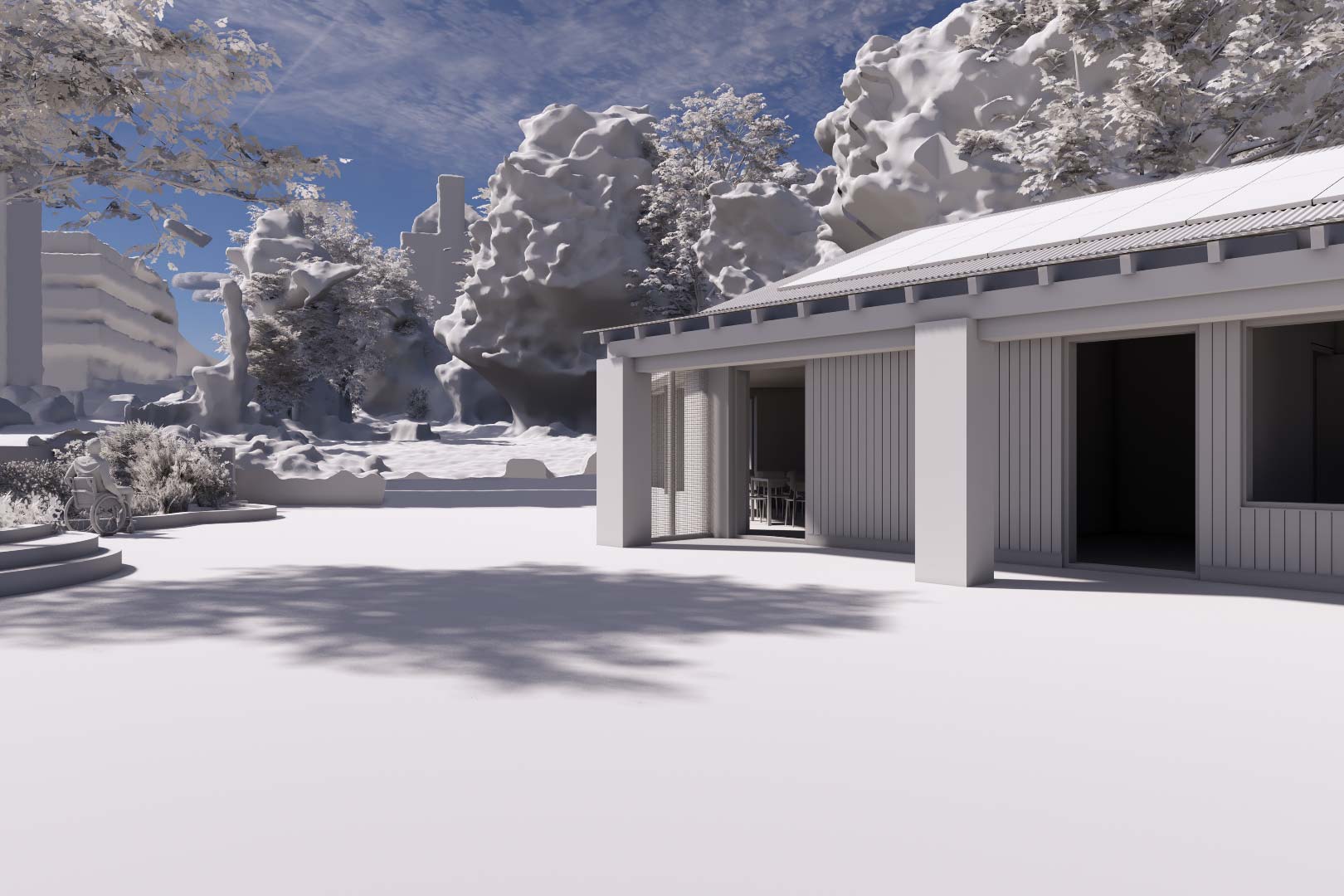
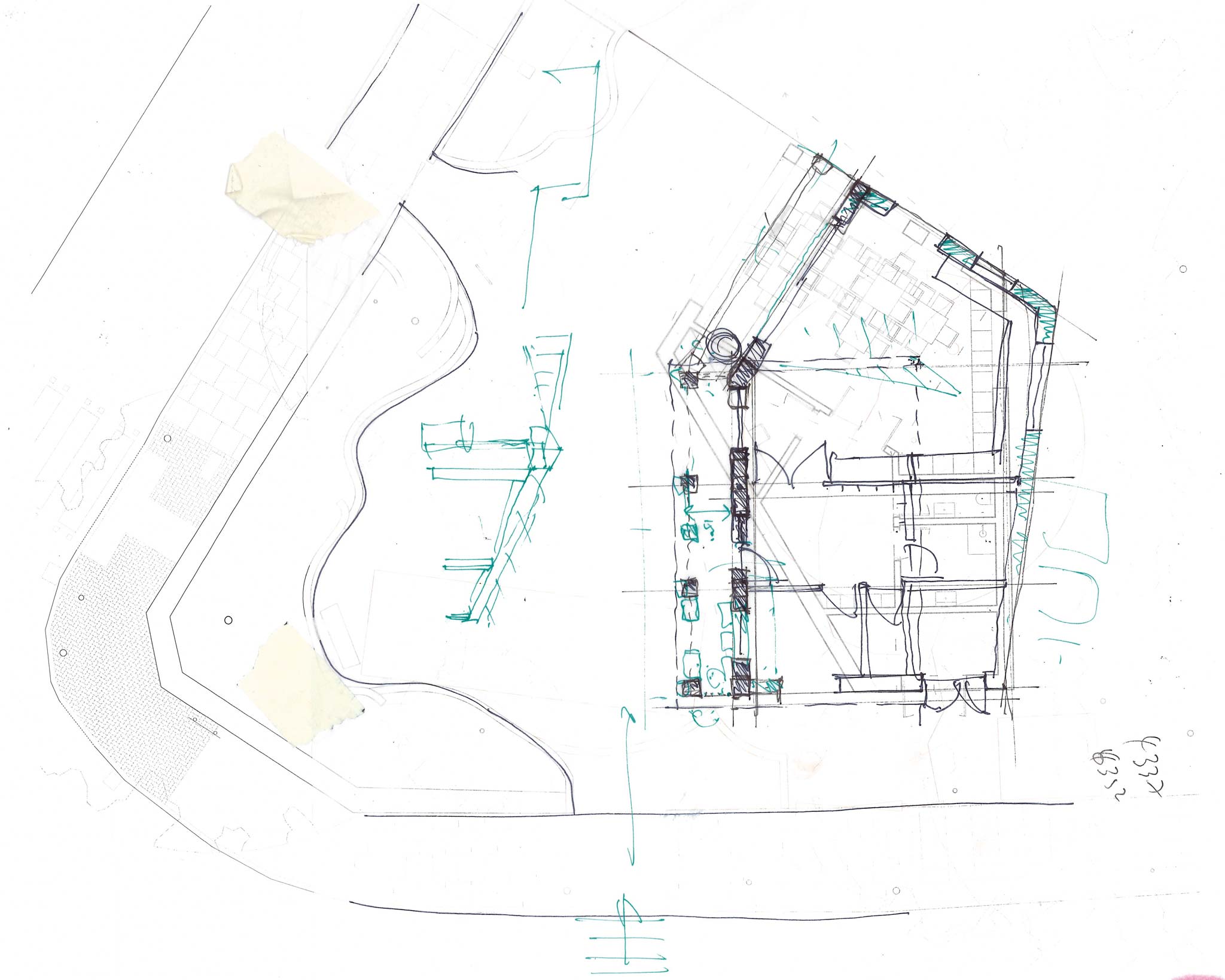
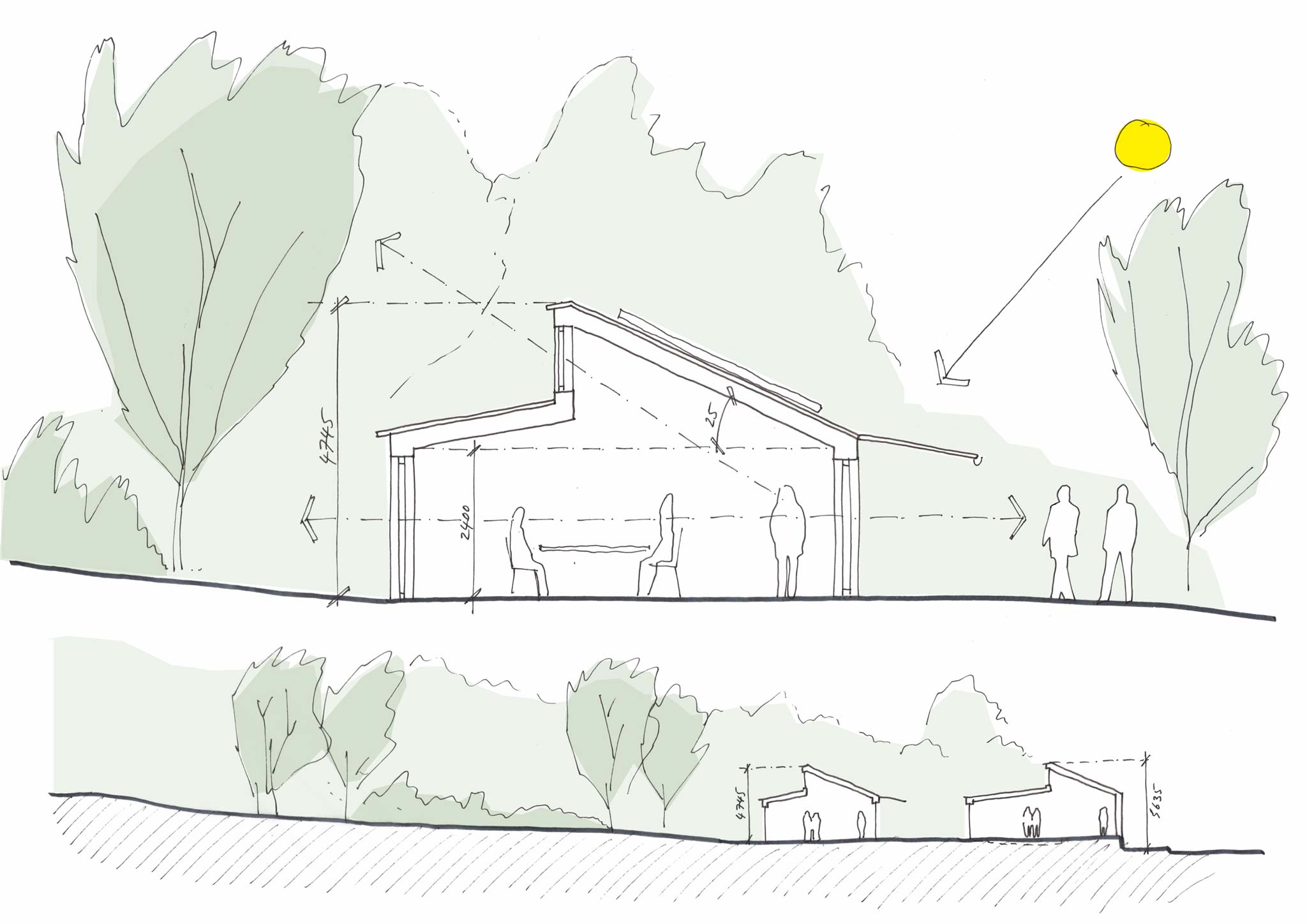
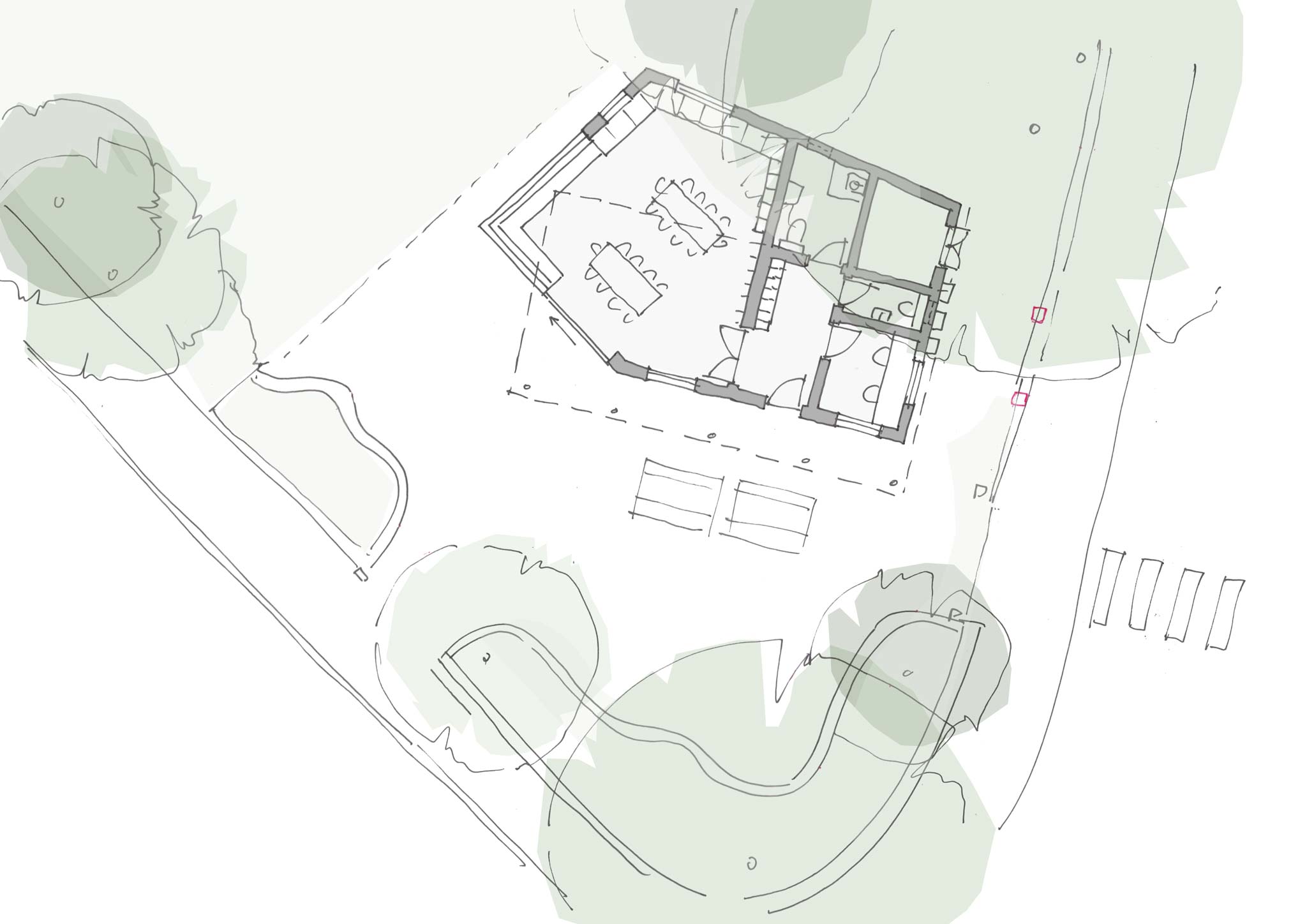
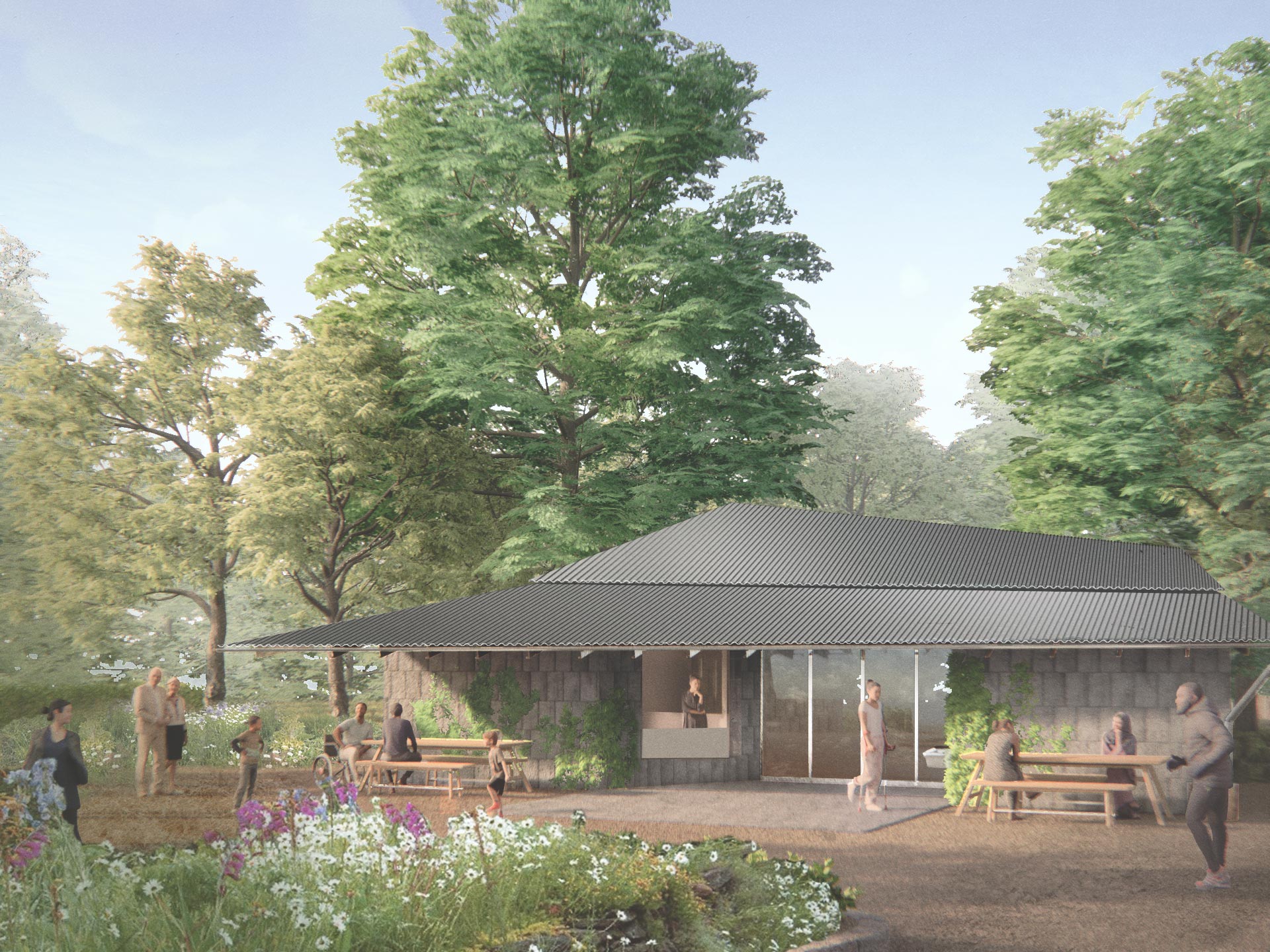
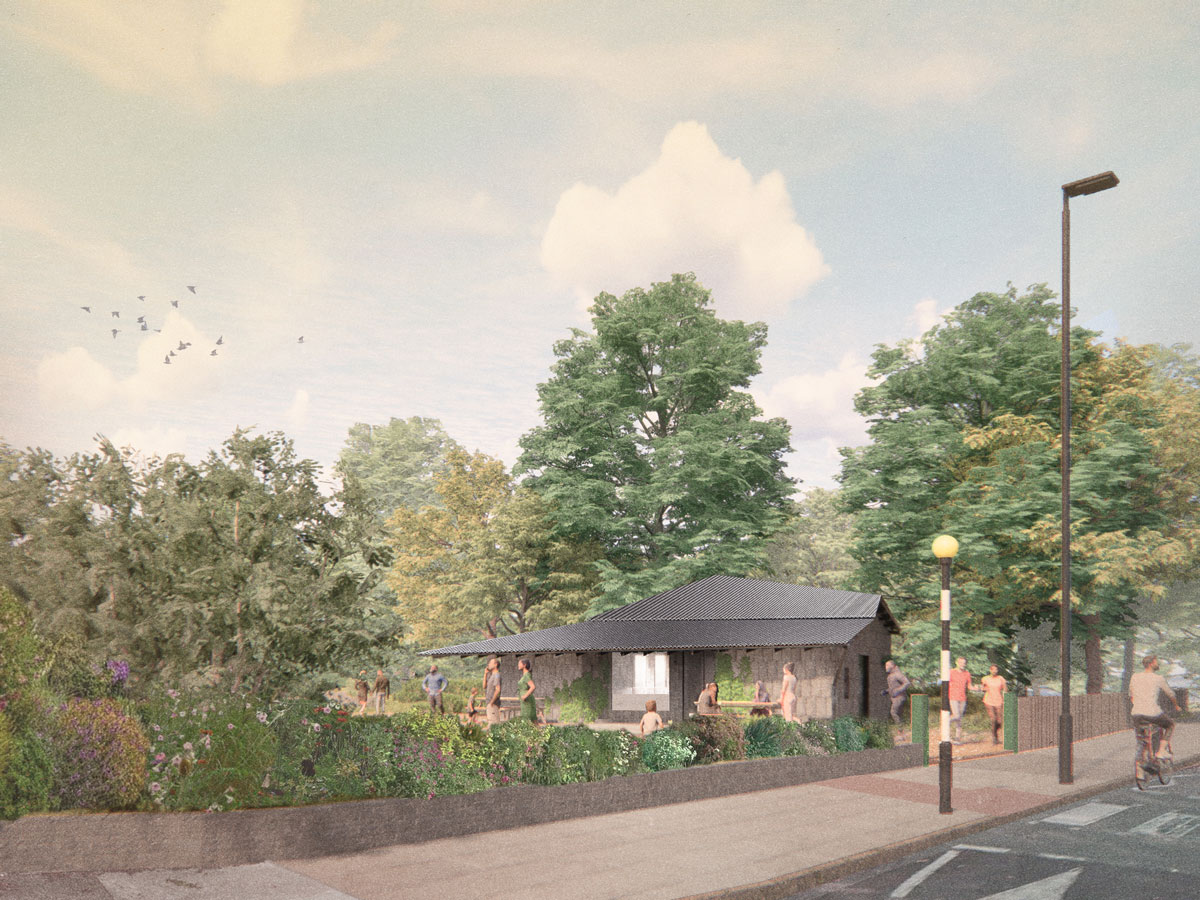
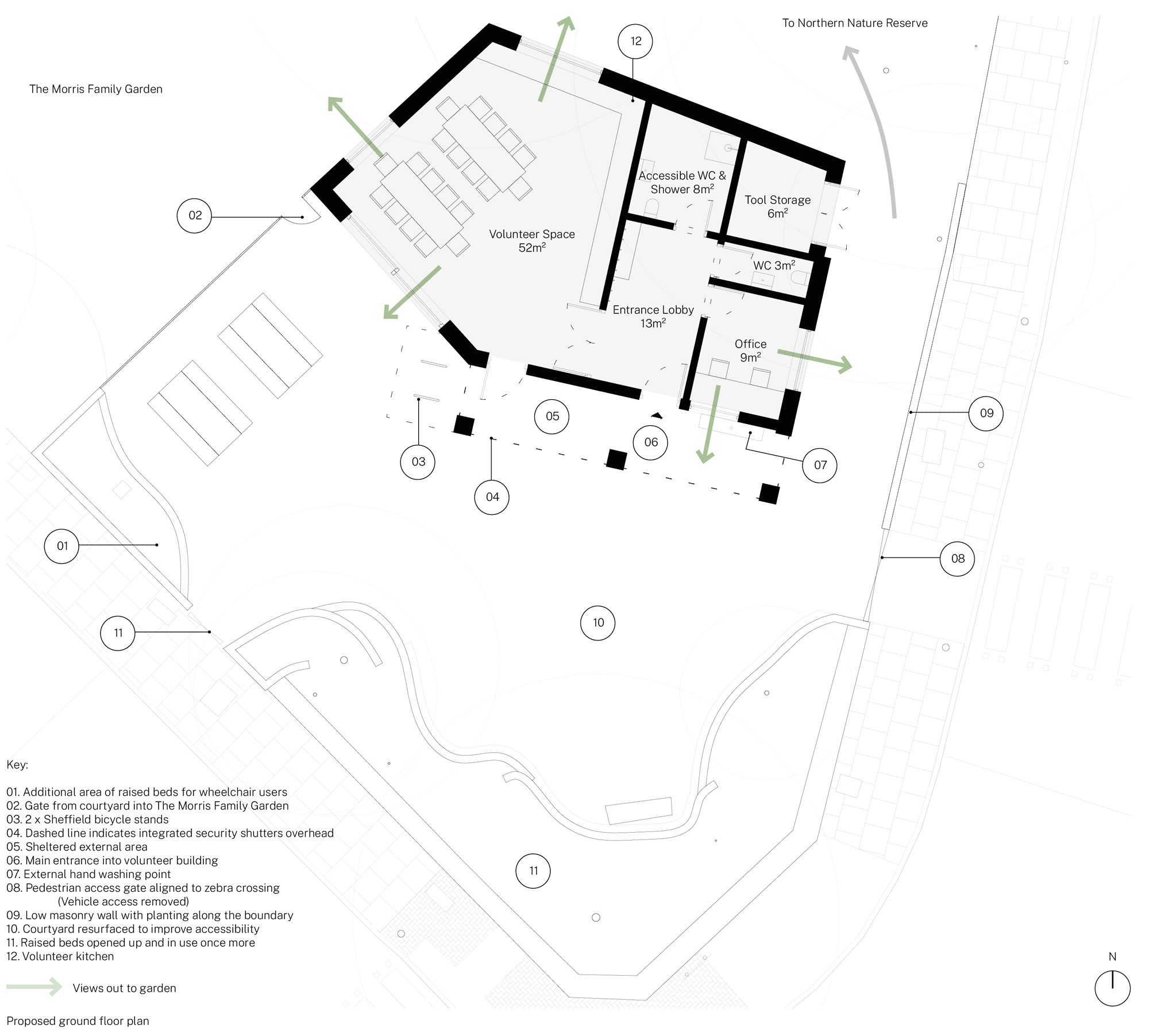
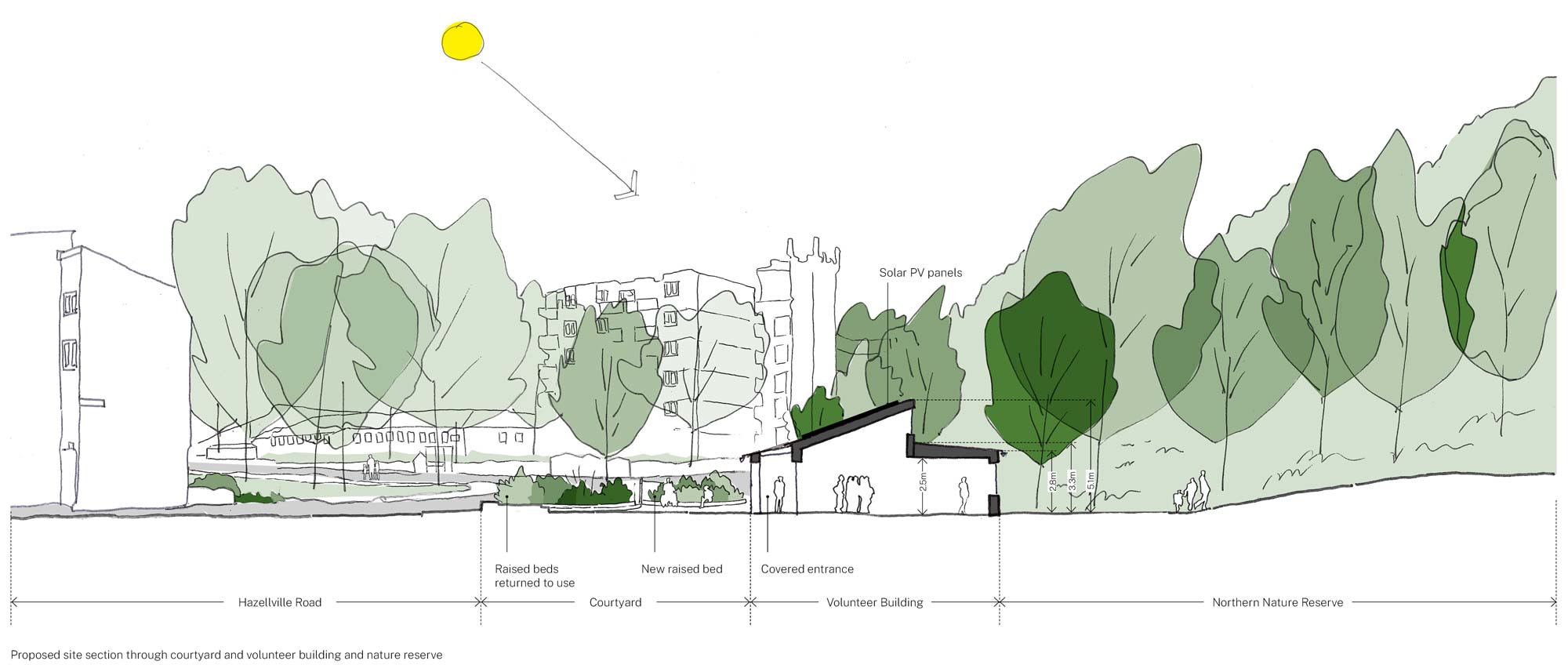
We pulled the building back from the street corner, following the site's natural desire lines and slope rather than reinforcing the urban edge. The plan organises around a generous porch: a sheltered threshold that acts as social space, handwashing station, and security line between street and interior. The roof geometry is driven by function: a south-facing slope for solar panels and shading, pitching up towards the north to create clerestory windows that frame views of mature trees and connect volunteers to the Morris Family Garden to the north.

The palette uses robust park materials (brick, corrugated metal roofing, metal mesh) chosen for fire resistance while avoiding a domestic or shed-like aesthetic. Security shutters and screens are designed to support planting and potentially host community murals, softening the necessary fortress quality.

Inside, the space is designed for flexibility. It can accommodate loud communal lunches while providing quiet zones for volunteers with neurodiverse needs who find the current container overwhelming. High-contrast materials support visual accessibility. Accessible kitchen counters and fully accessible toilets replace facilities that were previously impossible to use for elderly volunteers or those with mobility issues.

The planning process required navigating the tension between Islington's strict protection of green space and the need for premises that enable the charity to maintain that space. The introduction of Biodiversity Net Gain legislation mid-project added a requirement to increase site biodiversity by 10% on an already constrained footprint.

The building is fabric-first and all-electric, with high insulation, triple glazing, and a draft lobby to minimise running costs. The component-based design allows for potential future reuse. Material choices balanced fire resistance against embodied carbon concerns: we're exploring reclaimed brick or stone to offset the metal structure.

The result is a lo-fi, low-maintenance building that provides dignity and comfort while responding to the unique constraints of an unmanned, open-access community garden.


Sunnyside Community Gardens is a therapeutic horticulture charity occupying a triangular site on Hornsey Rise in Islington. The site is unusual: it's completely open, with no gates or barriers, and sits on what was once 1970s landfill from demolished terraced houses when nearby estates were built. Over decades, guerrilla gardening transformed it into a biodiverse pocket of green space, now designated as a Site of Importance for Nature Conservation.

More text

The brief was to replace an old shipping container and deteriorating timber toilet block with a proper building that could support the charity's post-pandemic needs. Critically, they needed space for communal lunches with 20 to 25 volunteers (impossible in the cramped, uninsulated container). The building also had to work for elderly volunteers and people with neurodiverse needs who found the current facilities overwhelming.

We pulled the building back from the street corner, following the site's natural desire lines and slope rather than reinforcing the urban edge. The plan organises around a generous porch: a sheltered threshold that acts as social space, handwashing station, and security line between street and interior. The roof geometry is driven by function: a south-facing slope for solar panels and shading, pitching up towards the north to create clerestory windows that frame views of mature trees and connect volunteers to the Morris Family Garden to the north.

The palette uses robust park materials (brick, corrugated metal roofing, metal mesh) chosen for fire resistance while avoiding a domestic or shed-like aesthetic. Security shutters and screens are designed to support planting and potentially host community murals, softening the necessary fortress quality.

Inside, the space is designed for flexibility. It can accommodate loud communal lunches while providing quiet zones for volunteers with neurodiverse needs who find the current container overwhelming. High-contrast materials support visual accessibility. Accessible kitchen counters and fully accessible toilets replace facilities that were previously impossible to use for elderly volunteers or those with mobility issues.

The planning process required navigating the tension between Islington's strict protection of green space and the need for premises that enable the charity to maintain that space. The introduction of Biodiversity Net Gain legislation mid-project added a requirement to increase site biodiversity by 10% on an already constrained footprint.

The building is fabric-first and all-electric, with high insulation, triple glazing, and a draft lobby to minimise running costs. The component-based design allows for potential future reuse. Material choices balanced fire resistance against embodied carbon concerns: we're exploring reclaimed brick or stone to offset the metal structure.

The result is a lo-fi, low-maintenance building that provides dignity and comfort while responding to the unique constraints of an unmanned, open-access community garden.


Sunnyside Community Gardens is a therapeutic horticulture charity occupying a triangular site on Hornsey Rise in Islington. The site is unusual: it's completely open, with no gates or barriers, and sits on what was once 1970s landfill from demolished terraced houses when nearby estates were built. Over decades, guerrilla gardening transformed it into a biodiverse pocket of green space, now designated as a Site of Importance for Nature Conservation.

More text

The brief was to replace an old shipping container and deteriorating timber toilet block with a proper building that could support the charity's post-pandemic needs. Critically, they needed space for communal lunches with 20 to 25 volunteers (impossible in the cramped, uninsulated container). The building also had to work for elderly volunteers and people with neurodiverse needs who found the current facilities overwhelming.

We pulled the building back from the street corner, following the site's natural desire lines and slope rather than reinforcing the urban edge. The plan organises around a generous porch: a sheltered threshold that acts as social space, handwashing station, and security line between street and interior. The roof geometry is driven by function: a south-facing slope for solar panels and shading, pitching up towards the north to create clerestory windows that frame views of mature trees and connect volunteers to the Morris Family Garden to the north.

The palette uses robust park materials (brick, corrugated metal roofing, metal mesh) chosen for fire resistance while avoiding a domestic or shed-like aesthetic. Security shutters and screens are designed to support planting and potentially host community murals, softening the necessary fortress quality.

Inside, the space is designed for flexibility. It can accommodate loud communal lunches while providing quiet zones for volunteers with neurodiverse needs who find the current container overwhelming. High-contrast materials support visual accessibility. Accessible kitchen counters and fully accessible toilets replace facilities that were previously impossible to use for elderly volunteers or those with mobility issues.

The planning process required navigating the tension between Islington's strict protection of green space and the need for premises that enable the charity to maintain that space. The introduction of Biodiversity Net Gain legislation mid-project added a requirement to increase site biodiversity by 10% on an already constrained footprint.

The building is fabric-first and all-electric, with high insulation, triple glazing, and a draft lobby to minimise running costs. The component-based design allows for potential future reuse. Material choices balanced fire resistance against embodied carbon concerns: we're exploring reclaimed brick or stone to offset the metal structure.

The result is a lo-fi, low-maintenance building that provides dignity and comfort while responding to the unique constraints of an unmanned, open-access community garden.


Sunnyside Community Gardens is a therapeutic horticulture charity occupying a triangular site on Hornsey Rise in Islington. The site is unusual: it's completely open, with no gates or barriers, and sits on what was once 1970s landfill from demolished terraced houses when nearby estates were built. Over decades, guerrilla gardening transformed it into a biodiverse pocket of green space, now designated as a Site of Importance for Nature Conservation.

More text

The brief was to replace an old shipping container and deteriorating timber toilet block with a proper building that could support the charity's post-pandemic needs. Critically, they needed space for communal lunches with 20 to 25 volunteers (impossible in the cramped, uninsulated container). The building also had to work for elderly volunteers and people with neurodiverse needs who found the current facilities overwhelming.

We pulled the building back from the street corner, following the site's natural desire lines and slope rather than reinforcing the urban edge. The plan organises around a generous porch: a sheltered threshold that acts as social space, handwashing station, and security line between street and interior. The roof geometry is driven by function: a south-facing slope for solar panels and shading, pitching up towards the north to create clerestory windows that frame views of mature trees and connect volunteers to the Morris Family Garden to the north.

The palette uses robust park materials (brick, corrugated metal roofing, metal mesh) chosen for fire resistance while avoiding a domestic or shed-like aesthetic. Security shutters and screens are designed to support planting and potentially host community murals, softening the necessary fortress quality.

Inside, the space is designed for flexibility. It can accommodate loud communal lunches while providing quiet zones for volunteers with neurodiverse needs who find the current container overwhelming. High-contrast materials support visual accessibility. Accessible kitchen counters and fully accessible toilets replace facilities that were previously impossible to use for elderly volunteers or those with mobility issues.

The planning process required navigating the tension between Islington's strict protection of green space and the need for premises that enable the charity to maintain that space. The introduction of Biodiversity Net Gain legislation mid-project added a requirement to increase site biodiversity by 10% on an already constrained footprint.

The building is fabric-first and all-electric, with high insulation, triple glazing, and a draft lobby to minimise running costs. The component-based design allows for potential future reuse. Material choices balanced fire resistance against embodied carbon concerns: we're exploring reclaimed brick or stone to offset the metal structure.

The result is a lo-fi, low-maintenance building that provides dignity and comfort while responding to the unique constraints of an unmanned, open-access community garden.


Sunnyside Community Gardens is a therapeutic horticulture charity occupying a triangular site on Hornsey Rise in Islington. The site is unusual: it's completely open, with no gates or barriers, and sits on what was once 1970s landfill from demolished terraced houses when nearby estates were built. Over decades, guerrilla gardening transformed it into a biodiverse pocket of green space, now designated as a Site of Importance for Nature Conservation.

More text

The brief was to replace an old shipping container and deteriorating timber toilet block with a proper building that could support the charity's post-pandemic needs. Critically, they needed space for communal lunches with 20 to 25 volunteers (impossible in the cramped, uninsulated container). The building also had to work for elderly volunteers and people with neurodiverse needs who found the current facilities overwhelming.

We pulled the building back from the street corner, following the site's natural desire lines and slope rather than reinforcing the urban edge. The plan organises around a generous porch: a sheltered threshold that acts as social space, handwashing station, and security line between street and interior. The roof geometry is driven by function: a south-facing slope for solar panels and shading, pitching up towards the north to create clerestory windows that frame views of mature trees and connect volunteers to the Morris Family Garden to the north.

The palette uses robust park materials (brick, corrugated metal roofing, metal mesh) chosen for fire resistance while avoiding a domestic or shed-like aesthetic. Security shutters and screens are designed to support planting and potentially host community murals, softening the necessary fortress quality.

Inside, the space is designed for flexibility. It can accommodate loud communal lunches while providing quiet zones for volunteers with neurodiverse needs who find the current container overwhelming. High-contrast materials support visual accessibility. Accessible kitchen counters and fully accessible toilets replace facilities that were previously impossible to use for elderly volunteers or those with mobility issues.

The planning process required navigating the tension between Islington's strict protection of green space and the need for premises that enable the charity to maintain that space. The introduction of Biodiversity Net Gain legislation mid-project added a requirement to increase site biodiversity by 10% on an already constrained footprint.

The building is fabric-first and all-electric, with high insulation, triple glazing, and a draft lobby to minimise running costs. The component-based design allows for potential future reuse. Material choices balanced fire resistance against embodied carbon concerns: we're exploring reclaimed brick or stone to offset the metal structure.

The result is a lo-fi, low-maintenance building that provides dignity and comfort while responding to the unique constraints of an unmanned, open-access community garden.


Process

Observations

200.

Sunnyside Community Garden, Islington

Year:

2018-

Location: London

, England

Category:

Public